

Teaching Strategies for Teaching Kids with Dyslexia
One of the most commonly asked questions is:
“What kind of teaching strategies should I use with my child? He has dyslexia.”
Teaching a child with dyslexia to read is complicated issue requiring more explanation. After you read this page, you can find more information on dyslexia and programs in the Learning Abled Kids’ READING section.
As far as Teaching Strategies go, a child who has dyslexia requires instruction aside from typical books and papers.
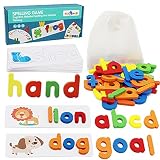
Multi-Sensory instruction is one of the best teaching strategies for almost anyone.
There are several good reasons to avoid focusing on one “style” when teaching persons with dyslexia, and any person for that matter. The number one factor for people with dyslexia is that they are often intelligent. They’re quite capable of learning all kinds of content when taught using audio-visuals, hands-on activities, demonstrations, etc. Therefore, good teaching strategies often make the difference between a child’s progress in school, or lack of progress.
Considerations outside of teaching strategies:
If your child is receiving good instruction using the best teaching strategies, then you may need to consider other problems that cause problems with learning to read.
There is also the Irlen Syndrome, which is a sensitivity to certain portions of the light spectrum making it difficult to read the written word on certain color papers and-or under certain lighting conditions. These problems are treated with color-spectrum altering lenses or overlays. This condition is also “medical” in nature, not a neurological processing issue, but sometimes labeled as “dyslexia”.
Another issue with reading is ocular motor deficiencies (difficulty with smooth eye tracking), which is sometimes inaccurately labeled as “dyslexia.”
Both scotopic sensitivity and ocular motor deficiencies are visual problems.
In other cases, a child MAY be a strong auditory learner, rather than a visual learner. These kids may be auditory learners, so teaching them strictly through a “visual” style would be detrimental their ability to learn. By mixing up teaching strategies to include visual, auditory, kinesthetic, and tactile activities, your instruction should help your child.
“True” dyslexia as defined by the International Dyslexia Association, shows most persons with true dyslexia are “visual” learners. This is because problems with phonemic awareness are language-based, which makes it harder to learn through words.
Kids with true dyslexia are not strong in processing language/phonemes, so they are seldom auditory learners. Their primary and secondary learning styles are generally, but not necessarily always, visual and kinesthetic. This alone makes teaching a child with dyslexia through multiple learning channels one of the best teaching strategies.
A multisensory teaching study by M. Martini revealed that “all students had significantly better achievements with multisensory approaches than with either auditory or visual approaches,” (“Effects of Traditional Versus Learning-Styles Instructional Methods in Middle School Students”, Rhonda Dawn Farkus, 2003, The Journal of Educational Research, Vol 97, No. 1). In her learning styles, multisensory study, Rhonda Farkus states, “The power of evidence supporting the benefits of learning-style methodology is compelling,” (Farkus, 2003).
“Achievement scores of students who were taught with instructional resources that matched their preferred modalities were statistically higher than were the scores attained by students who were not taught with learning-styles methods. Moreover, when students were taught with multisensory instructional resources, although initially through their most preferred modality, and then received reinforcement through their secondary or tertiary modality, scores further increased,” (Farkus, 2003).
The TOP Teaching Strategies for Kids with Dyslexia:
So, Multi-Sensory instruction is best.. Reinforcement of learning through multiple channels is well proved through study data. The most compelling study I’ve read to date on simultaneous multisensory teaching is “Sensory Mode and ‘Information Load”; Examining the Effects of Timing on Multisensory Processing” by Drew Tiene, Kent State University, International Journal of Instructional Media, Vol 27(2), 2000. This study shows clearly that hearing information, presented simultaneously with iconic visual input, is the most effective means of instructing. Using two channels of processing simultaneously allows the brain to process all at once and improves recall pathways through one channel or the other.
As far as teaching a person with dyslexia goes, the most effective teaching strategies are based upon Orton-Gillingham multisensory instruction. It must provide simultaneous presentation to the auditory, visual, kinesthetic, and tactile modes of learning. You might find the study “Teaching Reading in an Inner City School through a Multisensory Teaching Approach” (2002, Bouware-Gooden, Dahlgren, & Joshi, Annals of Dyslexia, Vol 52), interesting to read. Or perhaps, “Reflections. Teaching the secondary language functions of writing, spelling, and reading” (2003, Post, Y.V., Annals of Dyslexia, Vol 53).
One of my favorite studies is “Effects of Traditional Versus Learning-Styles Instructional Methods on Middle School Students” (2003, Farkus, R.D., The Journal of Educational Research, Vol.97 No 1). Farkus conveys, “Achievement scores of students who were taught with instructional resources that matched their preferred modalities were statistically higher than were the scores attained by students who were not taught with learning-styles methods. Moreover, when students were taught with multisensory instructional resources, although initially through their most preferred modality, and then received reinforcement through their secondary or tertiary modality, scores further increased,” (Farkus, 2003).
You can go through the Learning Abled Kids’ Multi-Sensory Training module to learn more about teaching your child with Multi-Sensory methods. Specifically for teaching persons with dyslexia, you might also want to look for Orton-Gillingham Manuals and other Orton-Gillingham teaching materials. They will also help you find information on teaching reading with learning styles based instruction.
So, I hope this information helps you further reach your focus in determining the best teaching strategies for kids with any variety of learning disability. By using multiple means of teaching and input, most learners will be better able to retain the instruction they receive.
One of the GREAT things about homeschooling is that you have the freedom and ability to use teaching DVDs, manipulatives, science kits, reenactments, hands-on projects, etc. for teaching your child. You don’t have to rely solely on traditional, classroom-style teaching strategies. You can serve your child’s needs well by using multisensory instruction on a daily basis!
Best Wishes! Sandy
—
