

Dyslexia Symptoms – What is TRUE Dyslexia? Be In the KNOW!
Is your child displaying Dyslexia Symptoms?
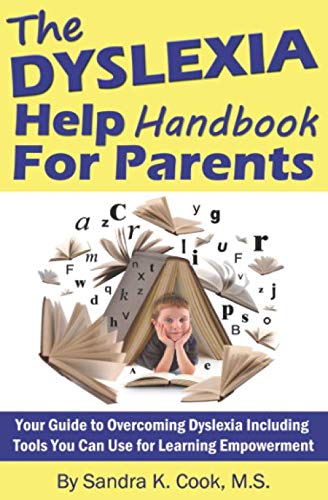
Do you think your child has symptoms of dyslexia, but you aren’t sure which dyslexia symptoms indicate true dyslexia in a child? When should you be concerned? Are the symptoms for some other type of issue?
Are you wondering where to begin? Do you start with glasses, colored paper, a reading program for dyslexia, neurological training, evaluations, etc.?
In addition to knowing the symptoms of dyslexia, it’s important to know what dyslexia IS and what it is NOT. You have to know the difference to help your child. Without identifying the true cause of your child’s reading problems, you could miss the boat altogether!
What is dyslexia?
Symptoms of dyslexia vary in degree. However, true dyslexia also has a specific definition. It can easily be diagnosed by a skilled examiner.
It’s important to know, Not all difficulties with reading are ‘dyslexia’. Check out the definition of dyslexia in order to understand what true dyslexia is and is not.
Primary Dyslexia Symptoms:
One of the MAIN symptoms of dyslexia is an inability to remember the relationships between the letters and their sounds. This skill is called “phonemic awareness.” Children who are diagnosed with true dyslexia have phonemic awareness issues.
They also frequently have memory-recall difficulties, processing speed difficulties, or executive function deficits. You’ll notice, there is NO vision problem as part of the diagnosis of true dyslexia. That is because true dyslexia is a neurological learning disability.
If your child sees words jumping around on the page, sees wavy lines, or has problems keeping his place while reading, these are NOT symptoms of true dyslexia. If these are your child’s symptoms, it is more likely your child has some OTHER reading problem besides true dyslexia. He may have true dyslexia ALSO, but he could have other issues listed next. True dyslexia is a neurological, language-based learning disability, not a visual-perceptual problem.
Sometimes the cause of reading problems are visual problems like Ocular Motor deficits or Scotopic Sensitivity. Other learning problems like short-term memory deficits, executive functioning disorder, or ADHD can cause reading problems too.
The true origin of your child’s reading problems the key to getting the type of help your child needs. Therefore, it is critical for you to know exactly what is causing your child’s dyslexia symptoms. Often children have problems in more than one area, so a comprehensive evaluation can really save you time and frustration in meeting your child’s needs.
Consider the Possibility of Multiple Learning Problems
Finding and working to solve one problem won’t be the end of your child’s reading struggles if he has multiple areas of difficulty. A child often has true dyslexia symptoms as well as visual perception problems and/or developmental eye difficulties.
Whatever your child’s issue(s) may be, children with dyslexia often reverse numbers and letters. Most kids have a few random reversals here and there. However, random problems are usually outgrown by time the child is 7. If your child is older than 7 and still has symptoms of dyslexia, there is a good chance your child will need direct help to overcome his difficulties.
Also, problems vary in degree, so some kids may not have big enough problems to propel parents into action until the child gets older. When the child encounters more difficult multi-syllable words on a regular basis (4th grade and above) problems become more obvious. Past the third grade, most words have two or more syllables, so a child may seem to be fine until the third, sixth, or even the ninth grade. See a writing sample of a child with diagnosed dyslexia at age 7.
Children Don’t Outgrow Learning Disabilities on Their Own:
Many people want to wait to see if their child outgrows the problem, but only 15% of children do. The other 85% end up needing some kind of help. Waiting is a bad bet! The sooner remediation is begun, the less time it takes to ‘rewire’ your child’s brain. Functional MRIs do show that the brain does change with remediation.
Thus, I always recommend early exploration for the origin of the symptoms of dyslexia rather than waiting. It doesn’t hurt anything to give your child help early. However, a lack of help can mean struggling, lowering of self-esteem, frustration with academics, the development of phobias over schoolwork, tantrums, etc.
Options for Seeking Evaluations Due to Dyslexia Symptoms:
While NOT MEDICAL OR PROFESSIONAL advice, there are simple things you can do to see which direction you want to go for assessing your child’s symptoms of dyslexia. You will find additional information about steps you can take to help figure out the root cause of your child’s reading problems on our page with additional information about true dyslexia. You’ll find three basic steps to take on the second half of the page.
Your best option is a complete neuropsychological or psychoeducational evaluation as soon as possible. If your child’s dyslexia symptoms exist after 7.5 to 8 years of age, he can be accurately evaluated. Note that early remediation (as early as age 5 or 6) improves a child’s learning outcomes. This is particularly true about the level of reading fluency a child can develop.
Helping Your Child Overcome Dyslexia Symptoms Without an Evaluation:
Even if your child is only suspected of having dyslexia, using a remedial reading program for dyslexia can improve your child’s reading skills. Using such a program will not be detrimental to your child.
Similarly, you can play games like Set: The Family Game of Visual Perception to try to improve your child’s skills while having some family fun. While this isn’t a therapeutic solution, it is one way to work on visual perception skills.
Remember, children with true dyslexia symptoms often have multiple issues. So, finding one problem may not be the complete solution. Consider a complete evaluation if your insurance will cover it, just to be sure. It will give you a good grasp on what kinds of help your child needs.
Check out our Reading Programs for Home Use and Proven Packaged Reading Programs for more information about overcoming true dyslexia.
—
